Series bible software
Continuity that survives the trilogy.
A series bible is one canon shared by every volume, and cross-book continuity is checking a later book against what an earlier one established. Most story bibles stop at the edge of a single manuscript; a series bible does not, because the contradictions that matter most in a series are the ones that span books.
In Loreon a series is one project with many volumes and one shared canon. Threads planted in book one are tracked into book three, and coherence is checked across your volumes on demand — for stories too big for one manuscript.
The mechanism
One canon, many books.
Volume three does not start from a blank page — it starts from everything book one established. Because the whole series shares one structured canon, a character's scars, a substance's rules, and a faction's reach are one reference every volume writes against — and the coherence check is what catches it when a later volume drifts from what an earlier one established. The shelf below is one project, not three.
One project, three volumes, one canon — threads planted, carried, and due.
What carries
Five things a later book can break.
Single-manuscript validation reads one book against canon. Cross-volume coherence reads the books against each other, which is a different question with different answers.
- Carried plot threads. A setup planted in volume one is not a loose end until the last volume closes. Threads are tracked to their payoff, or flagged as still owed.
- Character change. People are supposed to change between books — that is the series working. What canon holds is which changes happened, so volume three writes the character book two left behind rather than the one book one introduced.
- Timelines that span books. Ages, seasons, elapsed years and the gap between volumes. A three-year jump between books is where the arithmetic quietly stops working.
- World rules. A rule established in book one binds book three. Magic that costs something early and nothing later is the most common way a series loses its stakes.
- Who knows what, across volumes. A secret revealed to a character in volume two cannot be news to them in volume three — and a reader who has read all three will notice before any reviewer does.
Coherence checks
The volumes, read against each other.
Cross-volume coherence is its own check, run on demand: it reads the volumes against each other — the threads that paid off, the setups still waiting, and the places where book two quietly contradicts book one. Findings cite their volumes and passages, and the decision stays yours.
- Paid and unpaid threads. Setups are tracked to their payoffs — or flagged as still owed.
- Contradictions across books. When volume two moves a fact volume one established, the finding names both passages.
- On demand, like validation. Run it before book two locks book one's canon — and again before book three.
Mira's trade changes between volumes
Vol. I establishes her as a northern courier; vol. II calls her a guild clerk who "had never carried a letter in her life."
§ vol. I ch. 1 · vol. II ch. 1The sealed letter pays off
Planted in vol. I ("until the coast freezes through"), opened in vol. II — the chain is complete.
§ vol. I ch. 1 · vol. II ch. 2Coherence findings: a contradiction with both passages cited, and a thread tracked from plant to payoff.
In the studio
A series project, for real.
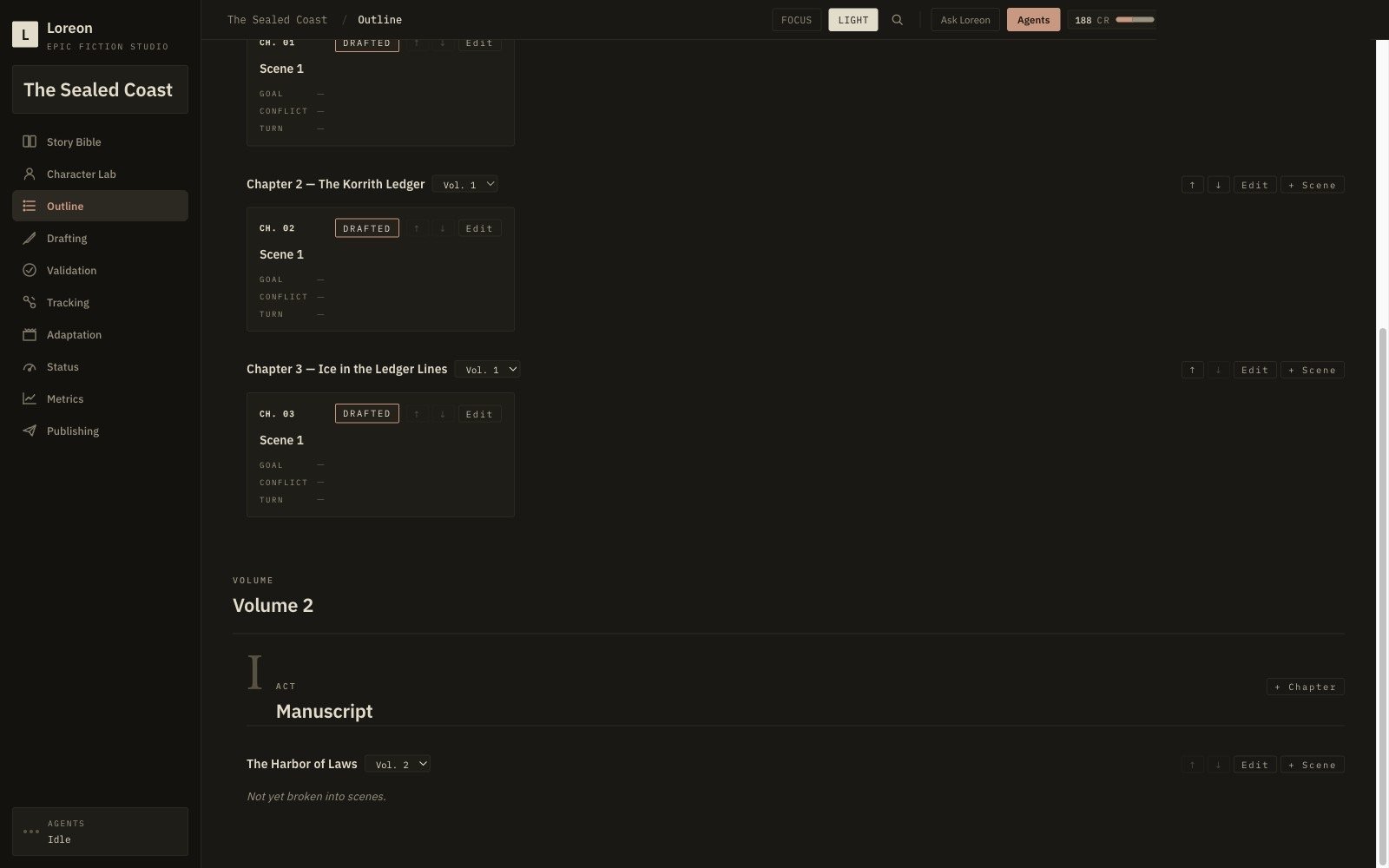
A two-volume project in one outline — Volume 1's three drafted chapters and the opening chapter of Volume 2, each tagged with the volume it belongs to, all under one shared story bible.
Common questions
Writing a series in one project.
Do I make one project per book?
No — one project, many volumes. That is what lets canon carry: every volume writes against the same story bible, and coherence checks can read the volumes against each other.
I'm starting book two. What should I run?
Two things, both on demand: validate book one so its canon is clean before it locks, then run coherence as book two grows — it will flag anywhere volume two drifts from what volume one established.
Can I add a volume to an existing book?
Yes — projects carry a volume count, and chapters belong to volumes; a standalone novel becomes book one of a series without starting over.
The bottom line
Book three remembers book one.
Readers remember; the series had better too. Shared canon plus on-demand coherence is how volume three stays true to volume one — with continuity checks for the scene in front of you and prepaid credits metering only the agent work. For the planning method, see how to plan a book series. For the mechanism rather than the pitch, see carrying canon between volumes, worked through.
Loreon · The Writing Studio
Try it on your own manuscript.
The editor is free, and welcome credits cover your first real agent work — no subscription, no card on file.